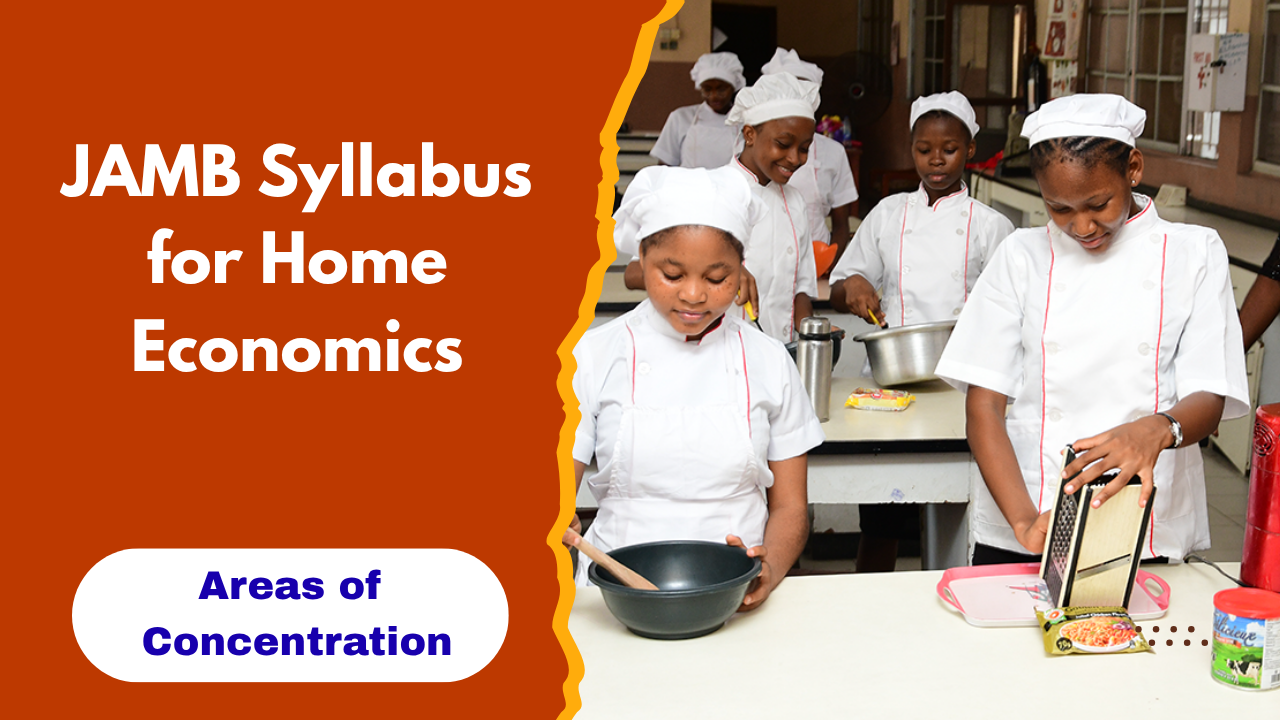
JAMB Syllabus for Home Economics
The JAMB Home Economics Syllabus for 2026/2027 is a useful guide for candidates preparing to write Home Economics at the Unified Tertiary Matriculation Examination (UTME). The JAMB Syllabus for Home Economics for the 2026/2027 UTME provides a clear guide to the topics and areas candidates are expected to study before the examination. When you have the right syllabus and know what to focus on, preparing for the JAMB Home Economics will be much easier for you.
The JAMB Home Economics syllabus contains the major topics, areas of concentration, learning objectives, and useful study guidance. It is designed to help candidates understand what to read, avoid wasting time on unrelated topics, and prepare more effectively for the UTME.
If you are writing Home Economics as one of your UTME subjects for the first time or preparing to improve your previous score, studying with the syllabus can help you organize your revision and identify areas that require more attention.
Instead of reading every Home Economics topic in your secondary school textbooks, candidates can use the syllabus to organize their studies and concentrate on the areas that matter most for the examination. That is why this guide is provided to guide you through everything you need to know about the JAMB Syllabus for Home Economics, the topics you should study, what JAMB expects you to understand from each topic, and useful tips to help you prepare for the examination.
Aims and Objectives of the JAMB Home Economics Syllabus
The main aim of the JAMB Home Economics syllabus is to prepare candidates for the UTME examination and test their understanding of important Home Economics concepts. According to the syllabus, candidates are expected to:
- Gain knowledge of the concepts and principles of Home Economics education.
- Apply the principles of foods and nutrition when planning, selecting and preparing meals, including food hygiene and safety.
- Develop knowledge and skills in clothing and textiles.
- Apply Home Management principles to housing and family living.
Therefore, candidates should not only memorize definitions. They should also understand how Home Economics principles are applied in everyday life.
Overview of the JAMB Syllabus for Home Economics 2026/2027
The JAMB Home Economics syllabus is divided into four main sections:
- Section A: Home Economics Education - This section introduces candidates to Home Economics, its importance, areas of study, career opportunities, and its relationship with other subjects.
- Section B: Home Management - This section covers resource management, family living, marriage, pregnancy, childcare, housing, sanitation, and consumer education.
- Section C: Foods and Nutrition - This section focuses on food, nutrients, meal planning, cooking, the kitchen, food safety, food preservation, and home gardening.
- Section D: Clothing and Textiles - This section covers fibres, fabrics, sewing equipment, garment construction, wardrobe planning, grooming and laundry.
Here is the detailed breakdown of all the topics candidates should study in the JAMB syllabus for Home Economics:
SECTION A: HOME ECONOMICS EDUCATION
1. Home Economics:
Candidates should study:
- Meaning, scope and importance of Home Economics
- Objectives and ideals of Home Economics
Candidates should understand the importance of Home Economics to the individual, the family, and society, and be able to identify its objectives and scope.
2. Areas and Careers in Home Economics
Candidates should study the different areas and career opportunities in Home Economics, including:
- Home Management
- Interior decoration
- Credit management
- Florist
- Catering
- Dietetics
- Nutrition
- Public Health Education
- Fashion designing
- Family and child development
- Early childhood education
- Teaching
- Counselling
- Media
- Research
Candidates should know the skills required for different careers, their benefits to individuals and society, current career opportunities and sources of career information.
3. Relationship Between Home Economics and Other Subjects
Candidates should understand how Home Economics relates to:
- Biology
- Geography
- Chemistry
- Physics
- Agricultural Science
- Fine Arts
- Economics
- Mathematics
Students should be able to explain how these subjects contribute knowledge to Home Economics.
SECTION B: HOME MANAGEMENT
1. Principles of Home Management
Topics include:
- Meaning of Home Management
- Steps in the management process
- Decision-making
- Meaning and process of decision-making
- Goals
- Values
- Standards
- Needs and wants
- Likes and dislikes
Candidates should understand how management works in the home and how decisions are made using available resources.
2. Resources
This topic covers human and material resources.
Human Resources
Study:
- Time management
- Types of time
- Types of work time
- Factors influencing the use of time
- Advantages of time management
- Energy management
- Work simplification
- Time-saving gadgets
- Skills
- Creativity
- Attitudes
Material Resources
Study:
- Meaning and types of material resources
- Income and money management
- Types of income
- Principles of money management
- Household budgeting
- Steps in making a budget
- Economic security of the family
- Bank accounts
- Traditional savings
- Building societies
- Insurance
Candidates should know how families use available resources, prepare household budgets, save money and manage income.
3. Family Living
Important areas include:
- Definition and types of family
- Advantages and disadvantages of different family types
- Family life cycle
- Family relationships
- Husband and wife relationships
- Parent and child relationships
- Sibling relationships
- Factors influencing family relationships
- Personality
- Extroversion
- Introversion
- Anxiety and stability
- Adolescents and their problems
- Family crises
- Conflict and conflict resolution
- Human rights
- Fundamental human rights
- Rights of women and children
- Human rights violations
- Communication in the family
- Role of ICT in the family
Candidates should understand family relationships, common family problems, conflict resolution, human rights and ways to improve communication in the home.
4. Marriage and Sex Education
Candidates should study:
- Meaning of marriage
- Meaning of sex education
- Boy/girl relationships
- Courtship
- Factors to consider when choosing a partner
- Preparation for marriage
- Meaning and purpose of engagement
- Types of marriage
- Islamic marriage
- Christian marriage
- Court marriage
- Traditional marriage
- Family planning
- Reproductive health
- Sexually transmitted infections and diseases
- HIV/AIDS
Candidates should understand the different types of marriage, the role of courtship and engagement, family planning and the causes and prevention of sexually transmitted infections.
5. Pregnancy and Childbirth
This topic covers:
- Menstruation
- Pregnancy
- Childbirth
- Labour and delivery
- Post-natal care
- Childcare
- Baby's layette
- Care of the baby
- Baby bathing
- Baby feeding
- Care of toddlers
- Common ailments in children
- Immunization
- Child development
- Stages of child development
- Social and emotional development
- Good habits and character training
- Play and play materials
- Parenting
- Responsibilities of parents
Candidates should understand the stages from conception to birth, care of children from birth to five years, pregnancy, labour, child development, play and parental responsibilities.
6. Housing the Family
Topics include:
Houses and Homes
- Types of houses
- Factors affecting the choice of a house
- Ways of acquiring a house
- Difference between a house and a home
Interior Decoration
- Wall finishing
- Colours
- Textures
- Lines
- Proportion
- Principles of art and design
- Flower arrangements
Furniture and Furnishings
- Types of furniture
- Factors affecting the choice of furniture
- Arrangement and positioning of furniture
Utilities in the Home
- Sources and uses of water
- Water purification
- Household fuels
- Gas
- Coal
- Kerosene
- Firewood
- Sawdust
- Electricity
- Electricity generation
- Electrical safety
- Communication devices
- GSM
- Computers
Candidates should understand how to choose a suitable home, decorate living spaces and select and arrange furniture and household utilities.
7. Home Surfaces
Study:
- Types of home surfaces and coverings
- Wood
- Tiles
- Formica
- Concrete
- Plastics
- Linoleum
- Mats
- Rugs
- Terrazzo
- Cleaning agents
- Water
- Soap
- Abrasives
- Polish
- Cleaning and care methods
- Sweeping
- Dusting
- Washing
- Shampooing
- Buffing
- Polishing
Candidates should know the appropriate cleaning agents and methods for different household surfaces.
8. Sanitation in the Home
Topics include:
- Drainage systems
- Care of drainage systems
- Disposal of household refuse
- Household pests
- Pest control
- Pollution
- Health hazards caused by pollution
Candidates should know how household waste is managed, common pests and their control, and the health effects of pollution.
9. Consumer Education
Candidates should study:
- Meaning and importance of consumer education
- Types of markets
- Distributors and consumer agents
- Sources of consumer information
- Purchasing practices
- Advertising
- Consumer rights
- Consumer responsibilities
- Government agencies and regulatory bodies
Candidates should understand how consumer education helps people make wise purchasing decisions and identify consumer rights and responsibilities.
SECTION C: FOODS AND NUTRITION
1. Foods and Nutrition
This topic covers:
- Meaning of food
- Meaning of nutrition
- Classification of nutrients
- Sources of nutrients
- Functions of nutrients
- Deficiency diseases
- Classification of foods
- Cereals
- Fats and oils
- Sugars
- Milk and milk products
- Meat
- Fish
- Pulses
- Nuts
- Fruits
- Vegetables
- Nutrition and health
- Factors affecting good nutrition
- Digestive system
- Nutrition for special groups
Special groups include:
- Infants
- Toddlers
- Adolescents
- Manual workers
- Expectant mothers
- Lactating mothers
- Sedentary workers
Candidates should understand nutrients, their functions and sources, digestion, and the nutritional needs of different groups.
2. Meal Planning
Study:
- Principles of meal planning
- Dietary needs
- Meals for special occasions
- Meals for special groups
- Preparation and serving of meals
- Snacks
- Beverages
- Table setting
- Table manners
- Hostessing
Candidates should be able to plan meals for occasions such as weddings, birthdays and anniversaries and for groups such as vegetarians and people recovering from illness.
3. Cookers and Cooking
Topics include:
- Types of cookers
- Gas cookers
- Electric cookers
- Microwave ovens
- Choice and care of cookers
- Reasons for cooking
- Cooking terms
- Methods of cooking
- Boiling
- Stewing
- Baking
- Steaming
- Moist methods
- Dry methods
- Fast methods
- Slow methods
- Heat transfer
- Conduction
- Convection
- Radiation
Candidates should be able to classify cooking methods and identify the type of heat transfer involved in cooking.
4. Flours and Uses
Study:
- Types of flour
- Uses of flour
- Raising agents
- Air
- Yeast
- Palm wine
- Steam
Candidates should know how different types of flour and raising agents are used in food preparation.
5. Basic Mixtures
Topics include:
- Pastries
- Batters
- Meaning of pastries
- Meaning of batters
- Uses of pastries and batters
Candidates should understand the difference between batters and pastries and know their uses.
6. Scientific Methods in Foods and Nutrition
Study:
- Units of measurement
- Accuracy in measurement
- Nutrient tests
- Tests for protein
- Tests for fats
- Tests for carbohydrates
- Recipe development
Candidates should understand measurement, basic food tests, and how to develop basic recipes.
7. The Kitchen
Topics include:
- Types of kitchen
- Kitchen arrangement
- Kitchen tools
- Kitchen equipment
- Selection of tools and equipment
- Use of kitchen tools and equipment
- Care of kitchen tools and equipment
Candidates should know the difference between large and small kitchen equipment and the factors to consider when selecting kitchen tools.
8. Safety and Hygiene
Study:
- Common accidents in the home
- Causes of accidents
- Prevention of accidents
- First aid
- First aid kit
- Burns
- Scalds
- Cuts
- Bruises
- Bleeding
- Electric shock
- Poisoning
- Choking
- Bites
- Kitchen hygiene
- Personal hygiene
- Food hygiene
- Communicable diseases
- Non-communicable diseases
- Sense organs
- Care of sense organs
- Exercise
- Cosmetics
Candidates should know how to prevent common accidents, provide simple first aid and prevent food contamination and disease.
9. Food Storage and Preservation
Important areas include:
- Meaning and purpose of food preservation
- Causes of food spoilage
- Principles of food preservation
- Methods of food preservation
- Convenience foods
- Types of convenience foods
- Guidelines for selecting convenience foods
- Food additives
- Types and uses of food additives
- Rechauffe dishes
- Meaning of rechauffe dishes
- Rules for rechauffe dishes
- Types
- Advantages and disadvantages
Candidates should understand why food spoils, how food is preserved and stored, and the advantages and disadvantages of convenience foods and rechauffe dishes.
10. Home Gardening
Study:
- Meaning of home gardening
- Common gardening tools
- Advantages of home gardening
- Types of soil
- Plants and crops suitable for home gardens
- Preparation of a home garden
- Care of a home garden
Candidates should understand the basic process of home gardening, identify gardening tools, and know their economic importance.
SECTION D: CLOTHING AND TEXTILE
1. Fibres and Fabrics
Topics include:
- Origin of fibres
- Textile terms
- Fibres
- Fabrics
- Yarn
- Staple
- Filament
- Blends
- Locally made fabrics
- Aso-oke
- Okene cloth
- Benue cloth
- Akwete
- Gwado
- Classification of fibres
- Properties of fibres
- Cotton
- Rayon
- Silk
- Fabric finishes
- Moth-proofing
- Embossing
- Durable pleating
- Flameproofing
- Stain-repellent finishes
- Tie and dye
- Screen printing
- Textile labelling
- Washing symbols
- Cleaning symbols
- Ironing symbols
- Wool symbols
Candidates should be able to identify fabric characteristics, understand textile labels, distinguish different weaves, and explain the importance of locally made fabrics.
2. Sewing Equipment and Garment Construction
This is an important area of Clothing and Textiles.
Candidates should study:
Sewing Machines and Tools
- Types of sewing machines
- Parts of sewing machines
- Uses of sewing machines
- Care of sewing machines
- Basic sewing tools and equipment
Garment Construction
- Basic stitches
- Seams
- Edge finishes
- Crossway strips
- Collars
- Yokes
- Pockets
- Frills
- Cuts
- Belts
Arrangement of Fullness
- Darts
- Tucks
- Gathering
- Pleats
- Smocking
- Shirring
Decorative Designs
- Decorative stitches
- Needlecraft
- Tatting
- Crocheting
- Knitting
- Appliqué
- Patchwork
- Soft toys
Garment Repair
- Patching
- Darning
- Renovation
- Batik
- Tie and dye
Garment Construction and Wardrobe Planning
- Figure types
- Body measurements
- Pattern drafting
- Selection of styles for different figures
- Factors influencing fabric choice
- Wardrobe planning
- Wardrobe maintenance
- Weather
- Occupation
- Personal features
Good Grooming
- Good grooming
- Dress sense
- Accessories
- Colour harmony
Candidates should understand sewing equipment, garment construction, clothing selection, wardrobe planning and basic garment maintenance.
3. Laundry and Care of Clothes
Topics include:
- Washing
- Finishing
- Sorting
- Mending
- Stain removal
- Soaking
- Rinsing
- Drying
- Ironing
- Laundry agents
- Water
- Detergents
- Soaps
- Stiffeners
- Disinfectants
- Meaning and types of stains
- Stain-removing agents
- Stain removal processes
- Ironing temperatures
Candidates should understand the correct order of laundry processes, the functions of laundry agents, stain removal, al and appropriate ironing temperatures.
Tips to Prepare for JAMB Home Economics
To perform well in JAMB Home Economics, candidates should study the syllabus carefully and practice regularly. The following tips can help:
- Study the JAMB Syllabus: Use the syllabus to guide your study and cover every topic.
- Understand Key Concepts: Focus on understanding topics rather than relying only on memorization.
- Know Important Differences: Pay attention to similar concepts, definitions, classifications, and processes.
- Practice Past Questions: Solve JAMB Home Economics past questions to improve your knowledge and accuracy.
- Revise Regularly: Review the topics often to help you remember important information.
- Study Practical Topics: Pay attention to cooking, sewing, laundry, food preservation, home management, and kitchen safety.
- Correct Your Mistakes: Review questions you get wrong and understand the correct answers.
- Practice CBT Tests: Take timed CBT practice tests to improve your speed and confidence.
- Cover the Full Syllabus: Do not focus only on easy or familiar topics. Study all sections of the syllabus.
Conclusion
The JAMB Syllabus for Home Economics 2026/2027 should be the first material candidates get when preparing for the examination. It will give you a clear idea of the areas you are expected to study and help you organize your preparation. The four major sections Home Economics Education, Home Management, Foods and Nutrition, and Clothing and Textiles- contain several topics, so candidates should begin their preparation early instead of trying to cover everything at the last minute.
For the best result, combine the syllabus with recommended textbooks, class notes, and JAMB Home Economics past questions. Study consistently, understand the topics,s and regularly test yourself with practice questions. Do not assume that a topic is too simple to appear in the examination. Study the entire syllabus and pay attention to the objectives listed under each topic, as they show the knowledge and skills candidates are expected to gain. Keep visiting this website for more updates, and if you have any inquiries, visit the comment box for assistance!